
You said you don’t like Substack. I don’t either. But I do use it.
Grand Rapids Book Club Kick Off

For those of you who are new to Famous and Beloved book clubs: they are for everyone. Book clubs are fun, for those of us that like appointments and homework. But there is nothing more annoying than something you follow—especially something you pay for—doing a book club in front of your face that you can’t or don’t want to participate in. Stop reading this book I’m busy! I try not to do that.
Posts will be about specific sections and passages in the book, but they will say enough about the world around us that I hope anyone can latch onto. I also like these to be advertisements for books, even if I hate the books. So far, we have read Beach Read by Emily Henry, Intermezzo by Sally Rooney, and watched the first season of Yellowstone. I liked one of these things, and I don’t think it would surprise you to learn which one. But I was so, so glad I read/watched all of it, and that I had people to talk about them with. I like telling you morons to read Emily Henry and to stop reading Sally Rooney—it diversifies your media diet, which you can probably put in the Core Competencies section of your resume if you want: Diversification of Media Diet.
The common thread between all the things we read in the Famous and Beloved Book Club is that they’re some combination of popular and “cool,” albeit with vastly different audiences. I skipped a summer club this year because I was getting yelled at for assigning too much homework, but in searching what to return to in the fall, I couldn’t stop hearing the words “Natasha Stagg” and “Grand Rapids.” So here we are. Fine by me, though, because at FBN HQ we love the midwest and white women with curly hair.
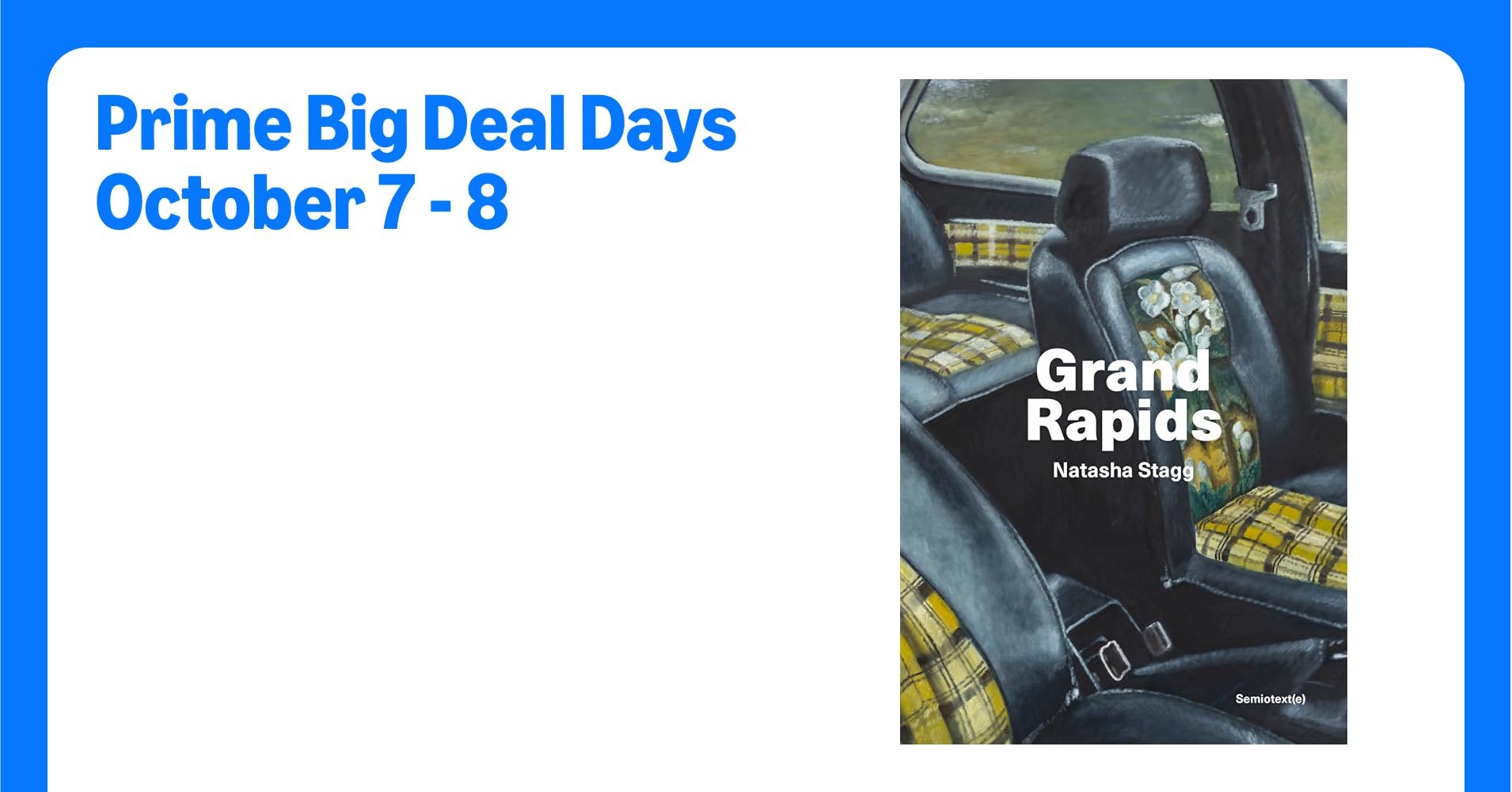
This post will engage with the first 30 pages of Grand Rapids, because if you’re following along I don’t know when you got your book and I don’t want to overwhelm you. Here is the rest of the brief schedule, which I retain the right to alter at will until someone pays me thousands-millions of dollars (American):
October 10: pages 31-136
October 17: pages 136-221
You can see all previous book club posts here.
I am surrounded by people who have some root somewhere in Michigan. I am from Wisconsin and lived in Chicago, now I live in New York City. You’d think that I would run into people from either of those places here, but I don’t, and I only ever hear about Michigan. This is interesting to me, because until pretty recently I had never been to Michigan. My whole life on the other side of the lake, and I imagined Michigan as Wisconsin 2: the place known to the world as “The Midwest,” of idyllic boats or whatever, where I have never been, but which is probably exactly the same as where I have been. Outside her fiction, Natasha Stagg seems to think similarly of her former home Grand Rapids, describing it not as “a small city, but it feels obscure to anybody living outside of America, and even most people from the Midwest tell me they’ve never been. Some people might not think it’s even a place. But if you know it, it’s one of those cities you can say so much about, and still won’t get it right.”
Recently, on my way to the Oasis concert in New Jersey (?), friends new and old regaled me with a familiar tale of the wasteland they call Western Michigan, which is where Grand Rapids is, I guess. Wisconsin doesn’t have this. Making a Murderer happened in wherever up north then there’s Green Bay—famous—but Jeffrey Dahmer was Milwaukee and Ed Gein La Crosse, Slender Man stabbings Waukesha. It’s all kind of the same, apart from the self-imposed-epic-lib-induced-50-mile divide between Milwaukee and Madison. Michigan culture is seemingly dispersed with more geographic exactitude, between the East which is connected to the world, and the West which is not.
Keep reading with a 7-day free trial
Subscribe to Famous and Beloved Newsletter to keep reading this post and get 7 days of free access to the full post archives.